.svg)
How to Choose the Right Solar Powered Fountain Pump (2026)


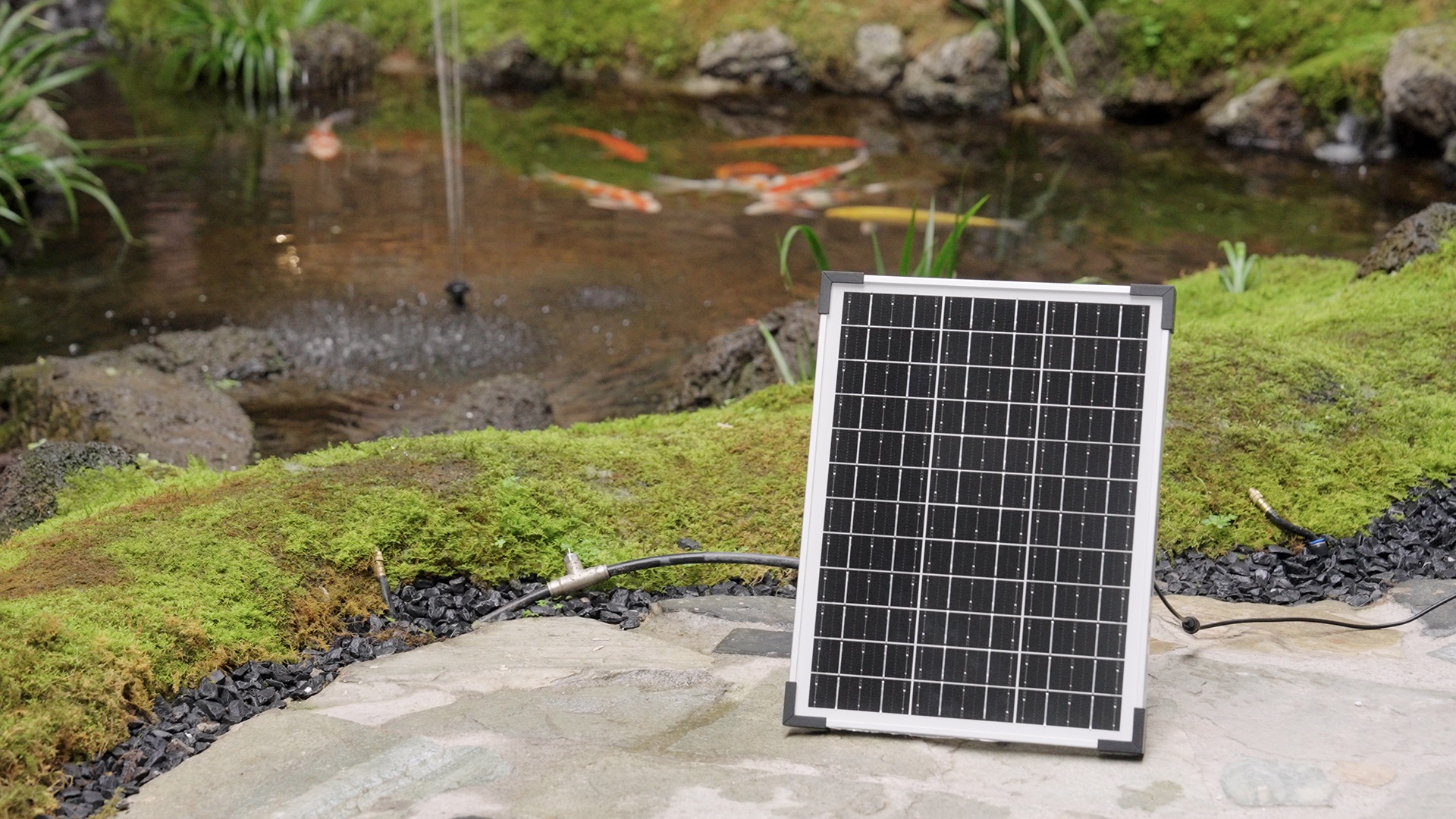
Moving water changes a backyard. It attracts birds, masks street noise, and keeps pond water healthier. The problem is that running a cord across your lawn to power a pump is inconvenient, and hiring an electrician for an outdoor outlet costs far more than the fountain itself.
A solar powered fountain pump solves this in the simplest way possible. It draws all its energy from sunlight, so there is no wiring, no trench digging, and nothing added to your electricity bill. Here's what you need to know before buying one.
Quick Answer
If you want the short version, choose your pump by matching three things to your water feature: wattage, flow rate (GPH), and battery backup.
Small features such as bird baths and patio bowls run well on 6W to 12W pumps. Ponds and larger fountains need 20W or more with higher flow. If you want water movement on cloudy days or in the evening, pick a model with a built-in battery. Everything below explains why these three factors matter more than anything else on the spec sheet.
How a Solar Powered Fountain Pump Works
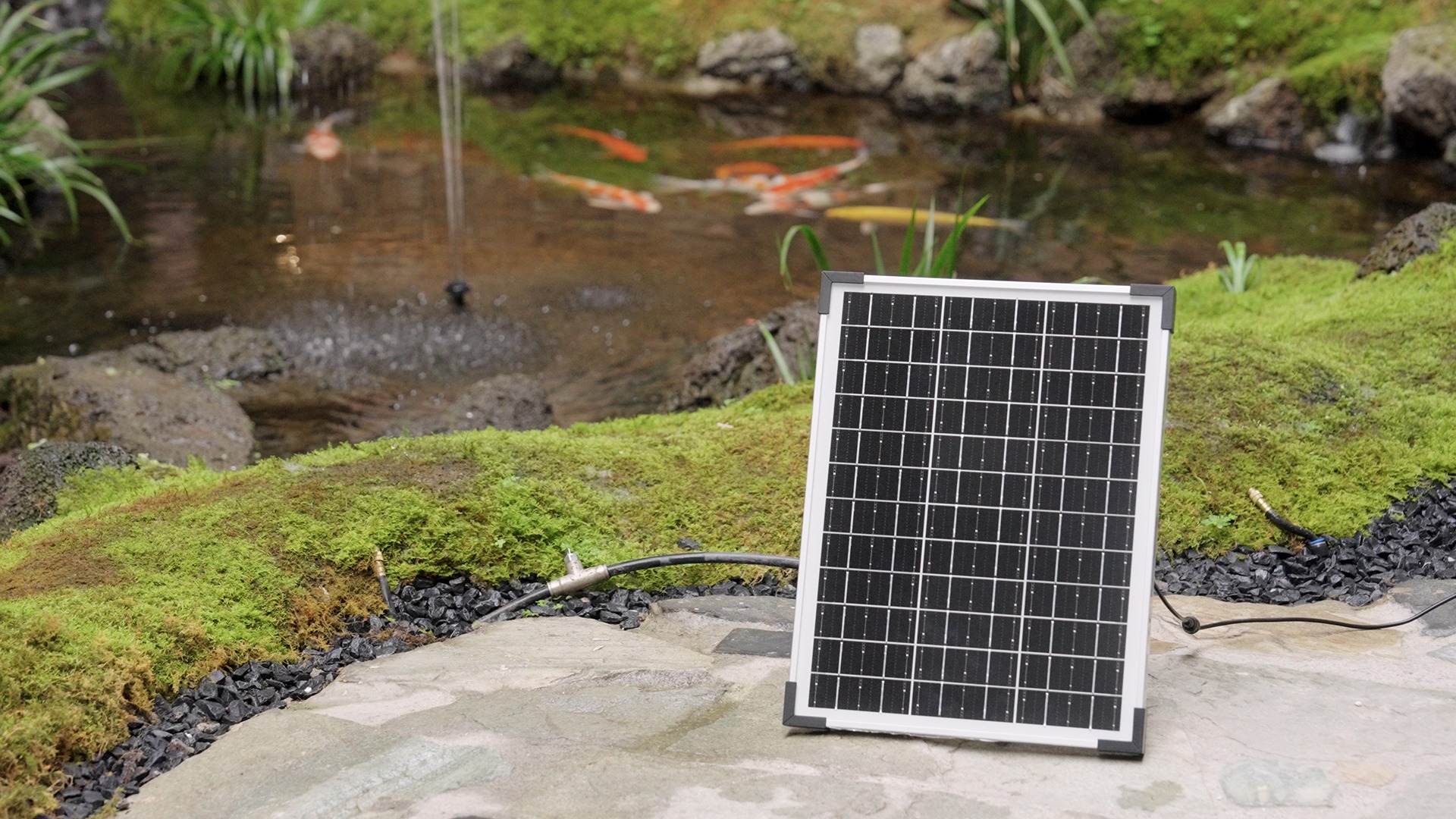
The system has two main parts: a photovoltaic solar panel and a small submersible water pump. The panel converts sunlight into electricity, which spins the pump's impeller and pushes water up through a tube or nozzle.
Because the panel responds directly to light, output rises and falls with the sun. Strong midday sunlight produces a tall spray, while morning light or thin clouds produce a gentler flow. Models with a battery backup smooth this out by storing extra daytime energy and releasing it when sunlight drops.
This direct relationship with sunlight is also the biggest advantage. In most cases, a solar pump costs nothing to operate for its entire life, which is why many owners recover the purchase price quickly compared to running a wired pump around the clock.
Where You Can Use One
Solar fountain pumps are more versatile than most buyers expect. The most common uses include:
- Bird baths. A gentle bubbling effect attracts far more birds than still water, and moving water also discourages mosquito breeding.
- Patio bowls and container fountains. Small floating or submersible pumps turn any watertight bowl into a fountain without an outlet nearby.
- Garden fountains. Standalone basins and tiered fountains run well on mid-size panels placed in a sunny spot.
- Fish ponds. Larger solar pumps circulate and aerate pond water, which supports fish health and slows algae growth.
- Waterfalls and spillways. Higher wattage kits can lift water to a raised spillway for a stream or waterfall effect.
One important thing to remember is that each use case needs a different pump size, which is exactly where many first time buyers go wrong.

How to Choose the Right Solar Fountain Pump
Four specifications decide whether you will be happy with your purchase.
Flow rate is measured in gallons per hour (GPH). Here's the detail most product listings skip: the rated GPH is the maximum flow with no tubing, no elbows, and no filter attached. In real conditions, you often get 20 to 40 percent less. A good rule is to buy a pump rated 20 to 30 percent above your calculated need.
Wattage tells you how much solar power drives the pump. For reference, bird bath pumps typically range from 6W to 12W, while pond and waterfall kits commonly run from 20W to 55W.
Lift height matters if water must travel upward to a nozzle or spillway. Check the maximum lift rating and remember that flow drops as lift increases.
Panel placement decides everything else. Most pumps need 5 to 6 hours of direct sunlight daily. If your feature sits in partial shade, choose a pump with a separate panel on a long cable so the panel can sit in full sun.
Once you know your numbers, it becomes much easier to compare solar powered fountain pump models by wattage, flow rate, and battery capacity instead of guessing from photos. Such as, POPOSOAP lists these specifications directly in the product name, for example, an 8W 80GPH bird bath pump, which makes matching a pump to your feature straightforward.
Battery Backup vs Direct Solar Models
This is the single most useful upgrade for most buyers, so it deserves a clear explanation.
A direct solar model runs only while sunlight hits the panel. A passing cloud pauses the fountain, and it stops completely in the evening. These models cost less and suit purely decorative features in sunny locations.
A battery backup model diverts part of the daytime energy into a built-in battery. When light fades, the pump switches to stored power automatically. Depending on battery size and charge, this typically adds several hours of runtime, which is why searches for a solar fountain pump that works at night almost always lead to battery models. As a verified example, POPOSOAP's bird bath pumps include built-in batteries of 2400mAh and 3000mAh, and some models add LED lights so the fountain stays visible after sunset.
If you keep fish, battery backup moves from nice to necessary, because steady water circulation and aeration protect oxygen levels when the weather turns cloudy.
Floating vs Submersible Pumps
A floating solar water pump combines the panel and pump into one unit that floats on the surface and sprays upward. It installs in seconds and suits shallow bird baths and bowls. The tradeoff is lighter flow and full dependence on direct sun hitting the floating panel.
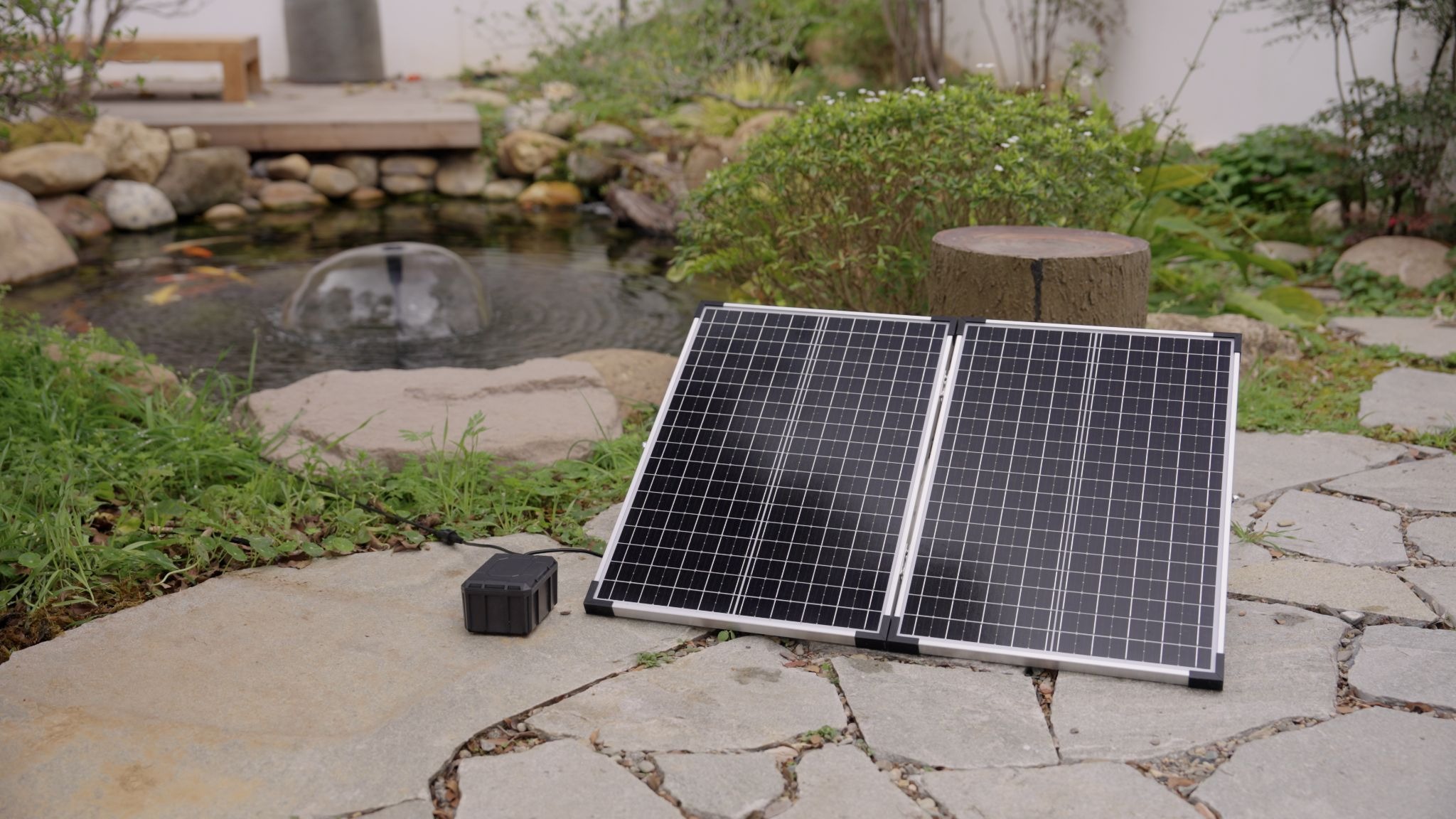
A submersible solar water pump for fountain setups sits on the bottom of the basin, connected by cable to a separate panel. This design delivers stronger and more stable flow, lets you position the panel in the sunniest spot, and supports nozzle attachments for different spray patterns. For anything larger than a bird bath, submersible models are usually the better long term choice.
Solar Pond Pump and Filter Systems
If you own a fish pond, a plain fountain pump only solves half the problem. Ponds also need filtration to remove debris and keep water clear.
A solar powered pond pump and filter kit combines both jobs in one unit. The pump pulls water through filter media, traps waste and particles, then returns clean water through a fountain nozzle. This improves clarity, supports beneficial bacteria, and reduces manual cleaning.
Sizing follows the same GPH logic. Aim to circulate your pond's full volume roughly once per hour, then add the 20 to 30 percent buffer for filter resistance. Combined pond and filter kits are available from roughly 4W with 60 GPH for small container ponds up to 55W with 580 GPH for larger fish ponds, so match the kit to your actual water volume rather than buying the biggest one.
Installation and Seasonal Maintenance
Installation is genuinely simple, which is a large part of the appeal:
- Place the pump on a flat, stable surface underwater, fully submerged.
- Position the panel where it gets unobstructed sun for most of the day.
- Connect the cable, attach your preferred nozzle, and let sunlight do the rest.
Maintenance takes a few minutes a month. Wipe the solar panel clean, since dust and pollen quietly cut power output. Rinse the pump filter and clear the impeller of debris. Top up water levels regularly, because running dry is the fastest way to burn out a pump motor.
Before winter arrives in freezing regions, drain the feature, dry the pump and tubing, and store the components indoors. Ice expansion cracks basins and ruptures pump housings, and spring reinstallation takes only minutes.
Common Problems and Quick Fixes
Most solar fountain issues have simple causes:
- Pump stops intermittently. Usually a shaded or dirty panel. Relocate or clean it.
- Weak spray. Check for a clogged filter sponge or debris around the impeller.
- Fountain won't run at dusk. The battery may need one or two full sunny days to recharge.
- Pump hums but moves no water. The water level is likely too low and the pump is drawing air.
According to manufacturer support pages, cleaning the panel and filter resolves the majority of complaints without any replacement parts. Buying from a trusted source that publishes user manuals and offers a real warranty also matters here. POPOSOAP, for instance, backs its pumps with a 1 year warranty, a 30 day return policy, and published troubleshooting guides.
Mistakes to Avoid Before Buying
Run through this checklist before you order:
- Don't size by rated GPH alone. Buy 20 to 30 percent above your need.
- Don't put a direct solar model in a shaded yard. Choose battery backup or a long cable panel.
- Don't skip filtration if you keep fish. Circulation alone won't keep water clear.
- Don't ignore lift height for waterfalls and tall nozzles.
- Don't buy unbranded pumps with no manual, no support, and no warranty.
Frequently Asked Questions
Do solar fountain pumps work on cloudy days?
Direct solar models slow down or pause under heavy clouds. Models with battery backup keep running on stored power, which makes them the better choice in variable climates.
Can a solar fountain pump run at night?
Yes, if it has a battery. A fully charged battery typically powers the pump for several hours after sunset. Direct solar models stop when the light fades.
What size pump do I need for a bird bath?
A 6W to 12W pump with around 80 GPH is enough for most bird baths. Birds actually prefer gentle bubbling over a strong spray.
How long do solar fountain pumps last?
With regular cleaning and proper winter storage, quality pumps commonly run for several seasons. Brushless motors and replaceable filters extend that further.
Do solar fountain pumps need maintenance?
Yes, but very little. Clean the panel and filter monthly, keep the water topped up, and store the unit indoors over freezing winters.
Choose the right wattage, respect the GPH buffer, and place your panel in full sun. Do those three things and a solar fountain pump will reward you with years of moving water that costs nothing to run.


