.svg)
Best Solar Dehydrator Guide for Food Preservation (2026)


Solar dehydrators are an eco-friendly and cost-effective way to preserve fruits, vegetables, herbs, meat, and other foods using the natural power of sunlight. By removing moisture from food, solar food dehydrators help extend shelf life, reduce food waste, and preserve nutrients without relying heavily on electricity.
Whether you want a DIY solar food dryer for off-grid living, a passive dehydrator for homesteading, or a high-efficiency active solar dehydrator for faster drying times, choosing the right system can significantly improve food preservation efficiency and sustainability.
In this guide, we'll explore the best solar dehydrator designs, passive vs active systems, DIY building plans, drying temperatures, food preservation tips, costs, and expert recommendations to help you choose or build the ideal solar dehydrator.
What Is a Solar Dehydrator?
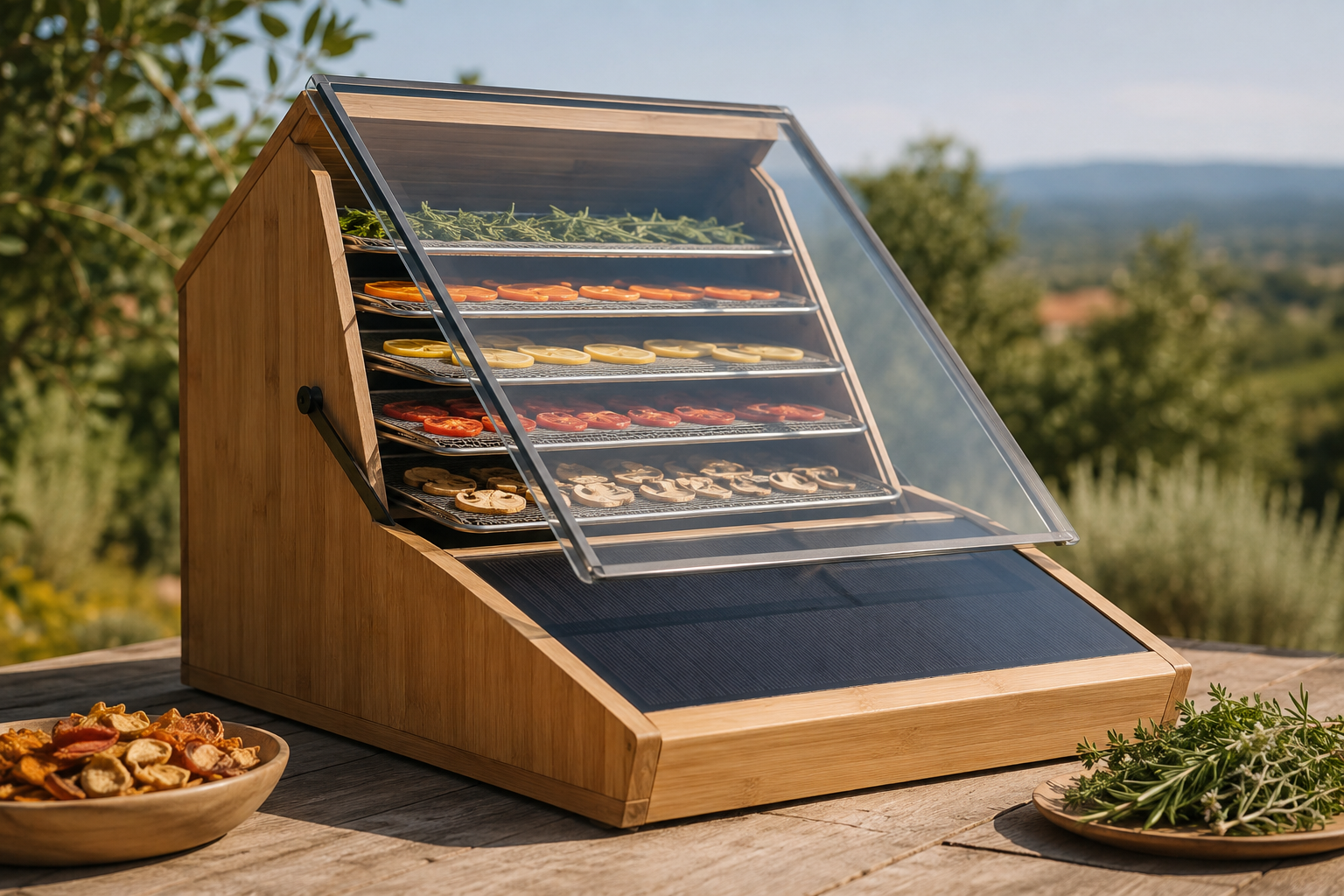
A solar dehydrator is a food preservation device that uses solar energy to remove moisture from fruits, vegetables, herbs, spices, and meats. By reducing water content, foods become less susceptible to bacterial growth, mold, and spoilage, allowing them to be stored for extended periods without refrigeration.
Solar food dehydrators have become increasingly popular among:
- Homesteaders
- Off-grid homeowners
- Garden enthusiasts
- Sustainable living advocates
- Emergency preparedness planners
Unlike electric dehydrators, solar dehydrators utilize renewable energy from the sun, making them environmentally friendly and cost-effective over the long term.
Benefits of Solar Food Dehydrators
- Lower energy consumption
- Reduced food waste
- Longer food shelf life
- Sustainable food preservation
- Minimal operating costs
- Ideal for off-grid applications
- Preserves nutrients and flavor
Also read abouit solar generators for increasing efficiency of your place!
How Solar Food Dehydrators Work
Solar dehydrators operate by combining heat and airflow to remove moisture from food.
The process typically involves:
- Solar radiation enters the collector.
- Air inside the dehydrator heats up.
- Warm air passes across food trays.
- Moisture evaporates from the food.
- Ventilation openings release humid air.
- Fresh warm air continues the drying cycle.
The effectiveness of a solar dehydrator depends on:
- Sunlight availability
- Airflow design
- Humidity levels
- Food thickness
- Drying temperature
Proper airflow is often just as important as heat generation because trapped moisture can significantly slow the drying process.
Passive vs Active Solar Dehydrators
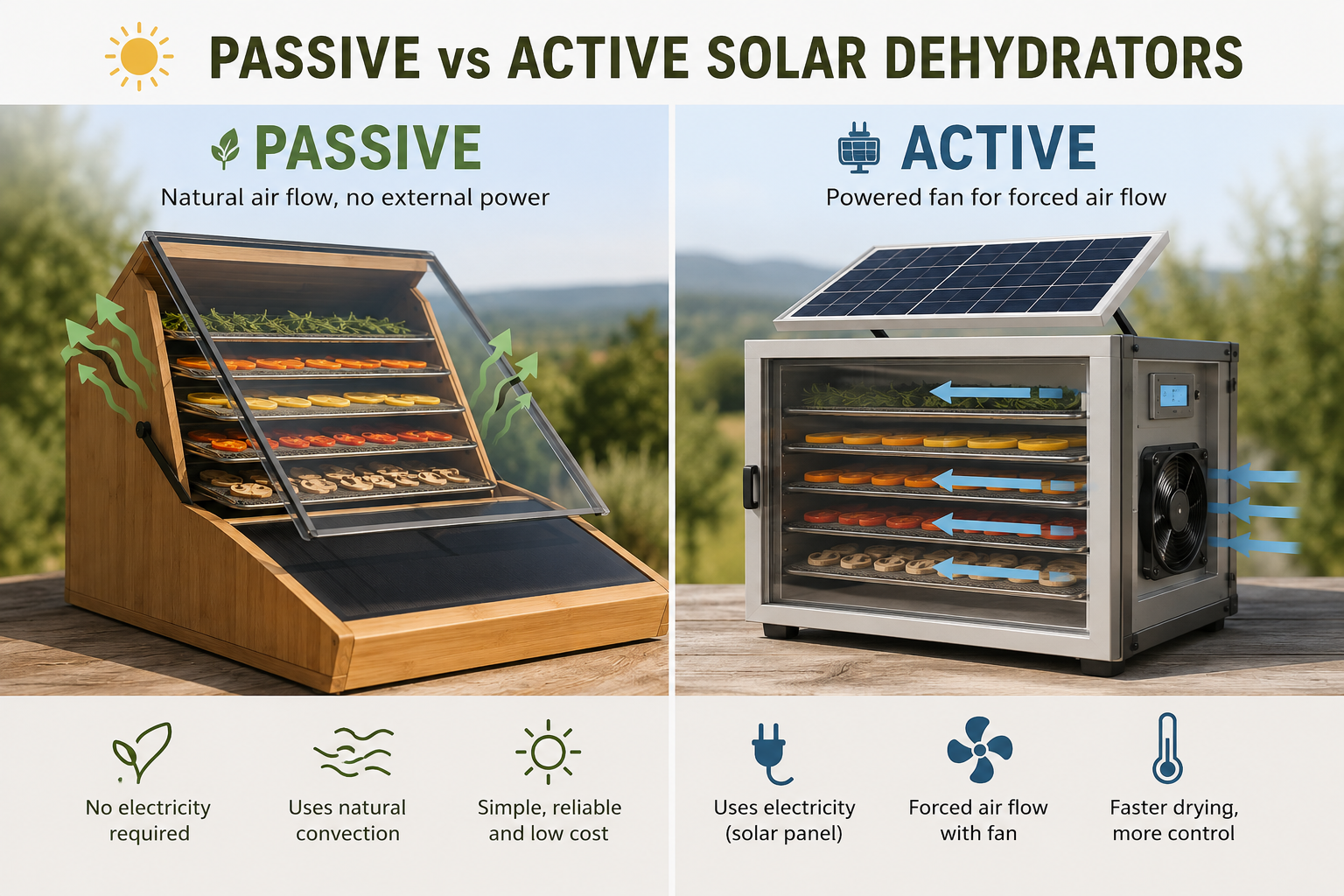
Choosing between a passive solar dehydrator and an active solar dehydrator depends on your budget, climate, drying volume, and performance expectations.
Passive Solar Dehydrators
Passive solar dehydrators use natural sunlight and airflow to dry food without electricity or powered ventilation systems.
They typically include:
- Solar collector
- Drying chamber
- Ventilation openings
- Food trays
- Transparent cover
Passive solar food dryers are especially popular among DIY enthusiasts because they are affordable and relatively easy to construct.
Advantages
- Low cost
- Simple construction
- No electricity required
- Easy maintenance
- Sustainable operation
Limitations
- Slower drying times
- Greater weather dependence
- Reduced efficiency in humid climates
Active Solar Dehydrators
Active solar dehydrators use solar-powered fans or additional airflow systems to improve drying efficiency.
These systems provide:
- Faster drying times
- More consistent temperatures
- Better airflow control
- Improved performance in humid conditions
Although active systems require a larger investment, they often produce more reliable results.
Best Foods to Dehydrate
One of the biggest advantages of solar food dehydrators is their versatility. A properly designed solar dryer can preserve a wide range of foods.
Fruits
Fruits are among the easiest foods to dehydrate.
Popular options include:
- Apples
- Bananas
- Mangoes
- Pineapple
- Strawberries
- Peaches
- Pears
Dried fruits make excellent snacks while retaining much of their natural sweetness.
Vegetables
Vegetables can be stored for months after dehydration.
Common choices include:
- Tomatoes
- Carrots
- Bell peppers
- Onions
- Mushrooms
- Green beans
Many gardeners use solar dehydrators to preserve seasonal harvests.
Herbs
Fresh herbs dry exceptionally well in solar food dryers.
Popular herbs include:
- Basil
- Mint
- Oregano
- Thyme
- Rosemary
- Parsley
Proper dehydration helps preserve flavor and aroma.
Meat and Jerky
With proper temperature control, solar dehydrators can also be used for jerky production.
Suitable meats include:
- Beef
- Turkey
- Venison
Food safety considerations become especially important when drying meat products.
Spices
Many spices can be preserved using solar dehydration.
Examples include:
- Chili peppers
- Garlic
- Ginger
- Turmeric
Drying helps extend shelf life while concentrating flavor.
Solar Gazebo for Sustainable Food Drying
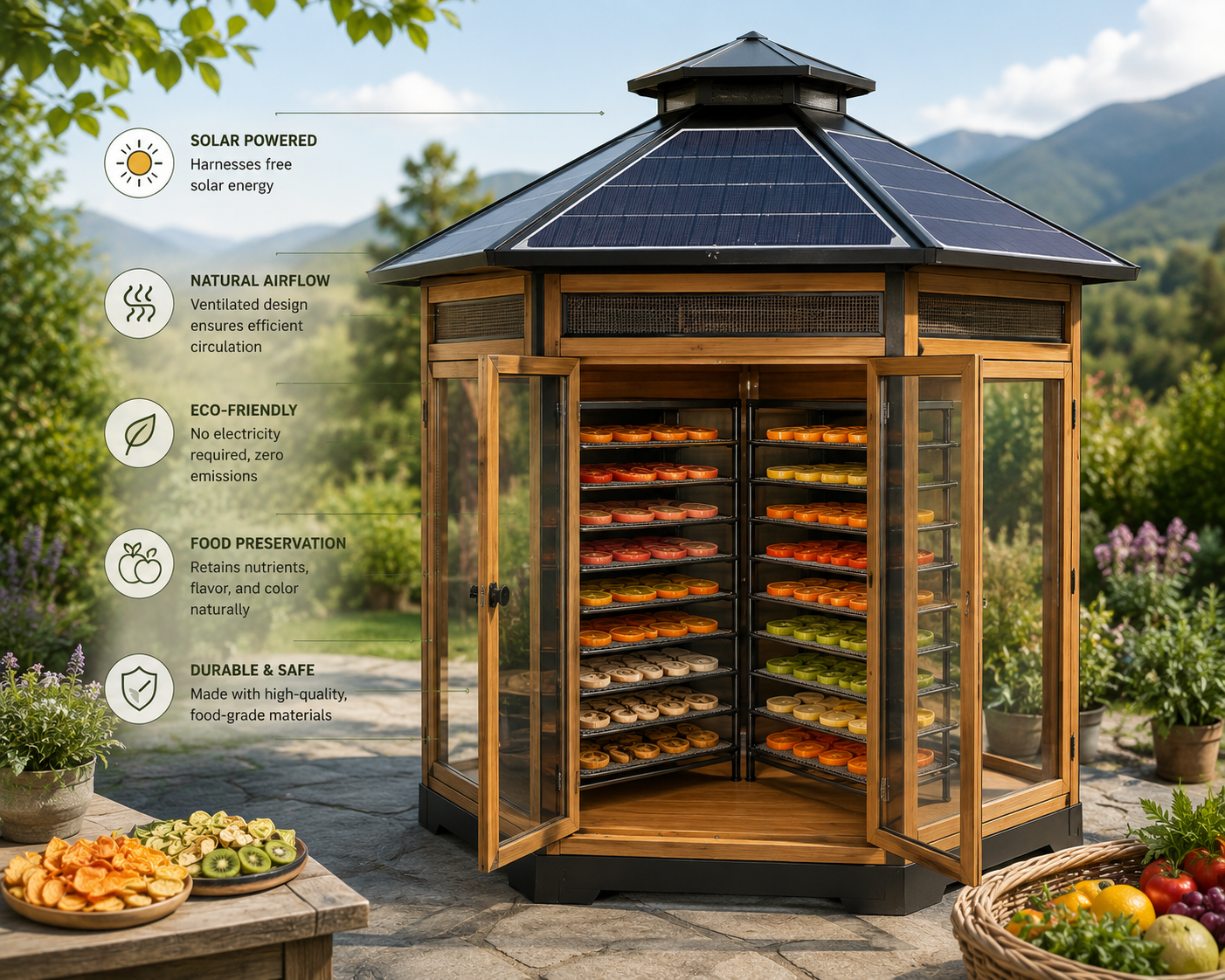
For homeowners interested in combining outdoor living with sustainable food preservation, a Solar Gazebo can provide an ideal environment for supporting solar dehydration activities.
A Solar Gazebo creates a shaded and energy-producing outdoor space where food preparation, sorting, and dehydration monitoring can take place comfortably. Integrated solar panels generate renewable energy while enhancing the functionality of the surrounding area.
Benefits of a Solar Gazebo
- Generates clean solar energy
- Supports sustainable living practices
- Creates a comfortable outdoor workspace
- Enhances backyard functionality
- Adds value to the property
- Modern and attractive design
- Eco-friendly outdoor solution
For homesteaders and sustainability-focused homeowners, a Solar Gazebo complements food preservation efforts while supporting a renewable-energy lifestyle.
DIY Solar Dehydrator Plans
Building a DIY solar dehydrator is one of the most affordable ways to preserve food while reducing dependence on electricity. Many homesteaders, gardeners, and off-grid homeowners prefer homemade solar food dryers because they can be customized based on drying capacity, climate conditions, and available materials.
A properly designed DIY solar dehydrator can effectively dry fruits, vegetables, herbs, and spices using free solar energy.
Basic Box Solar Dehydrator
A box-style solar dehydrator is one of the simplest designs for beginners.
The structure typically includes:
- Wooden frame
- Transparent cover
- Black heat-absorbing surface
- Ventilation openings
- Mesh drying trays
Sunlight enters through the transparent cover and heats the interior. Warm air circulates around the food while moisture escapes through vents.
Best For
- Small households
- Beginners
- Herb drying
- Fruit preservation
Cabinet-Style Solar Food Dryer
Cabinet-style dehydrators provide more drying space and better airflow control.
Features often include:
- Multiple drying trays
- Separate solar collector
- Improved ventilation
- Larger drying capacity
These systems are ideal for gardeners who regularly process large harvests.
Greenhouse Solar Dehydrator
A greenhouse-style solar dehydrator combines food drying with greenhouse principles.
Benefits include:
- Larger food capacity
- Better heat retention
- Extended drying season
- Increased productivity
This design works particularly well in sunny regions where consistent solar exposure is available.
Materials Needed for a DIY Solar Dehydrator
Common materials include:
- Plywood
- Lumber
- Aluminum sheet
- Polycarbonate panel
- Window screen mesh
- Hinges
- Screws
- Black paint
Most DIY solar dehydrator projects can be completed using readily available materials from local hardware stores.
Best Materials for Solar Dryers
Selecting the right materials significantly impacts the performance, durability, and efficiency of a solar dehydrator.
Wood
Wood is one of the most commonly used construction materials because it is affordable and easy to work with.
Advantages include:
- Low cost
- Easy customization
- Good insulation
- Widely available
Pressure-treated or weather-resistant wood is recommended for outdoor installations.
Aluminum
Aluminum is often used inside solar collectors because it reflects and transfers heat efficiently.
Benefits include:
- Corrosion resistance
- Lightweight construction
- Excellent heat performance
- Long lifespan
Polycarbonate Panels
Polycarbonate sheets are commonly used instead of glass.
Advantages include:
- UV resistance
- Durability
- Lightweight design
- Impact resistance
These panels allow sunlight to enter while helping retain heat inside the dehydrator.
Do not miss all you need to know about solar panel cleaning.
Food-Safe Mesh Trays
Food trays should allow airflow while preventing contamination.
Popular materials include:
- Stainless steel mesh
- Food-safe plastic mesh
- Wooden framed screens
Proper tray selection improves drying consistency and food safety.
Also read about Solar Coolers in detail for your place!
How to Improve Drying Efficiency
Many solar food dehydrator users struggle with slow drying times. Fortunately, several adjustments can dramatically improve performance.
Maximize Sun Exposure
Position the dehydrator where it receives direct sunlight throughout the day.
Avoid:
- Tree shade
- Building shadows
- Obstructions
Consistent solar exposure significantly improves drying speed.
Increase Airflow
Air circulation is essential for moisture removal.
Methods include:
- Larger vents
- Solar-powered fans
- Elevated drying racks
- Improved chamber design
Better airflow often improves drying more than additional heat alone.
Slice Food Evenly
Uniform food thickness ensures consistent drying.
Thin, evenly sliced foods:
- Dry faster
- Produce better texture
- Reduce spoilage risk
Rotate Trays
Rotating trays periodically helps compensate for temperature variations within the dehydrator.
This simple practice improves drying consistency and food quality.
Solar vs Electric Dehydrators
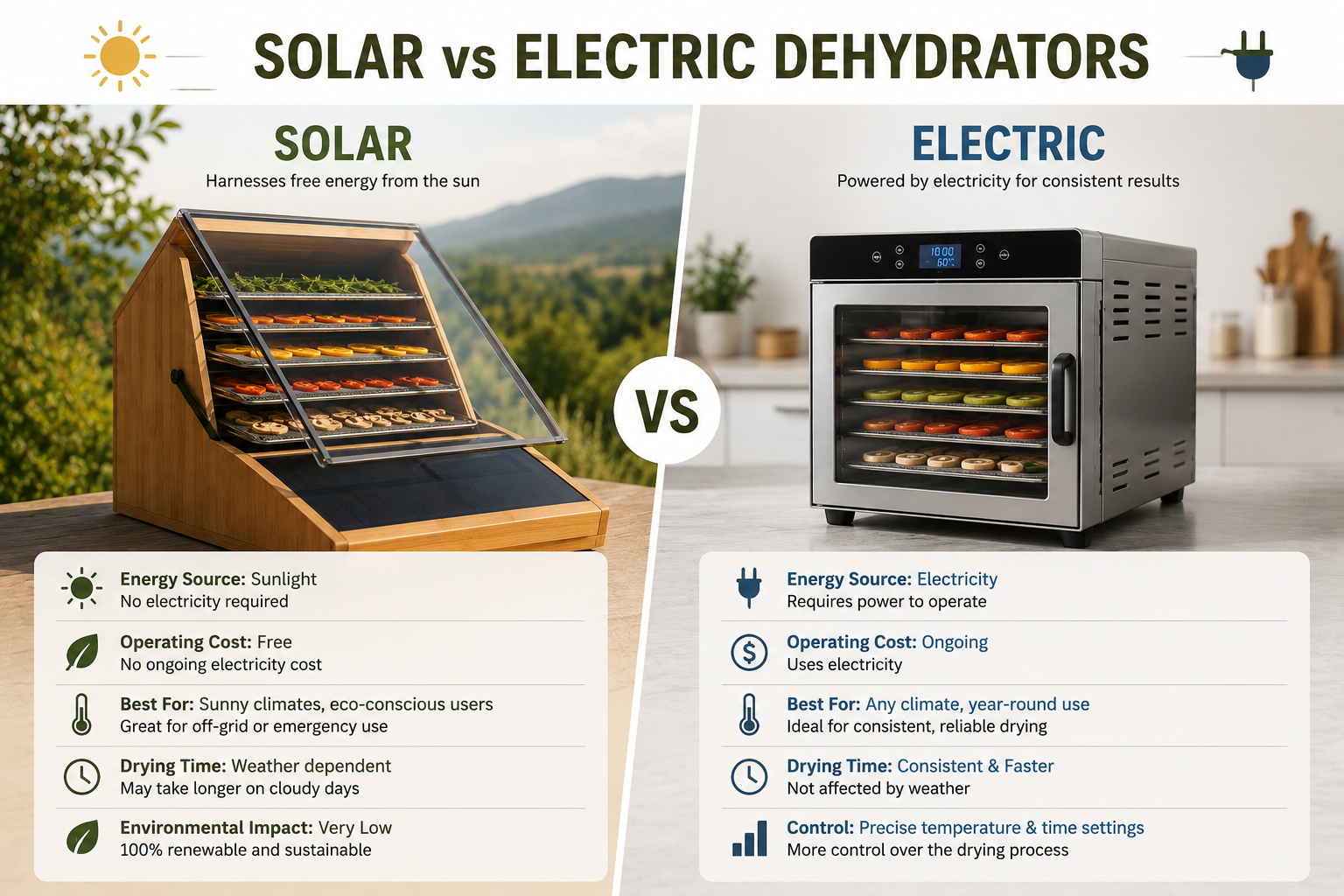
Many homeowners compare solar dehydrators and electric dehydrators before making a purchase decision.
Solar Dehydrators
Solar dehydrators use renewable energy from the sun to preserve food.
Advantages
- No electricity costs
- Eco-friendly operation
- Off-grid compatibility
- Lower environmental impact
Limitations
- Weather dependent
- Seasonal performance variations
- Longer drying times
Electric Dehydrators
Electric food dehydrators use powered heating elements and fans.
Advantages
- Consistent temperatures
- Faster drying
- Year-round operation
- Greater control
Limitations
- Electricity consumption
- Higher operating costs
- Reduced sustainability
Common Food Dehydration Mistakes
Understanding common mistakes can dramatically improve food preservation success.
Overcrowding Trays
Food should never overlap excessively.
Proper spacing:
- Improves airflow
- Speeds drying
- Prevents mold growth
Poor Ventilation
Insufficient airflow traps moisture inside the drying chamber.
This can lead to:
- Spoilage
- Uneven drying
- Longer processing times
Incorrect Temperatures
Temperatures that are too low may encourage bacterial growth.
Temperatures that are too high can:
- Damage nutrients
- Alter texture
- Reduce flavor quality
Improper Storage
Even perfectly dehydrated food can spoil if stored incorrectly.
Use:
- Airtight containers
- Vacuum-sealed bags
- Cool, dry storage locations
Proper storage extends shelf life significantly.
PowerPatio as a Sustainable Food Preservation Space
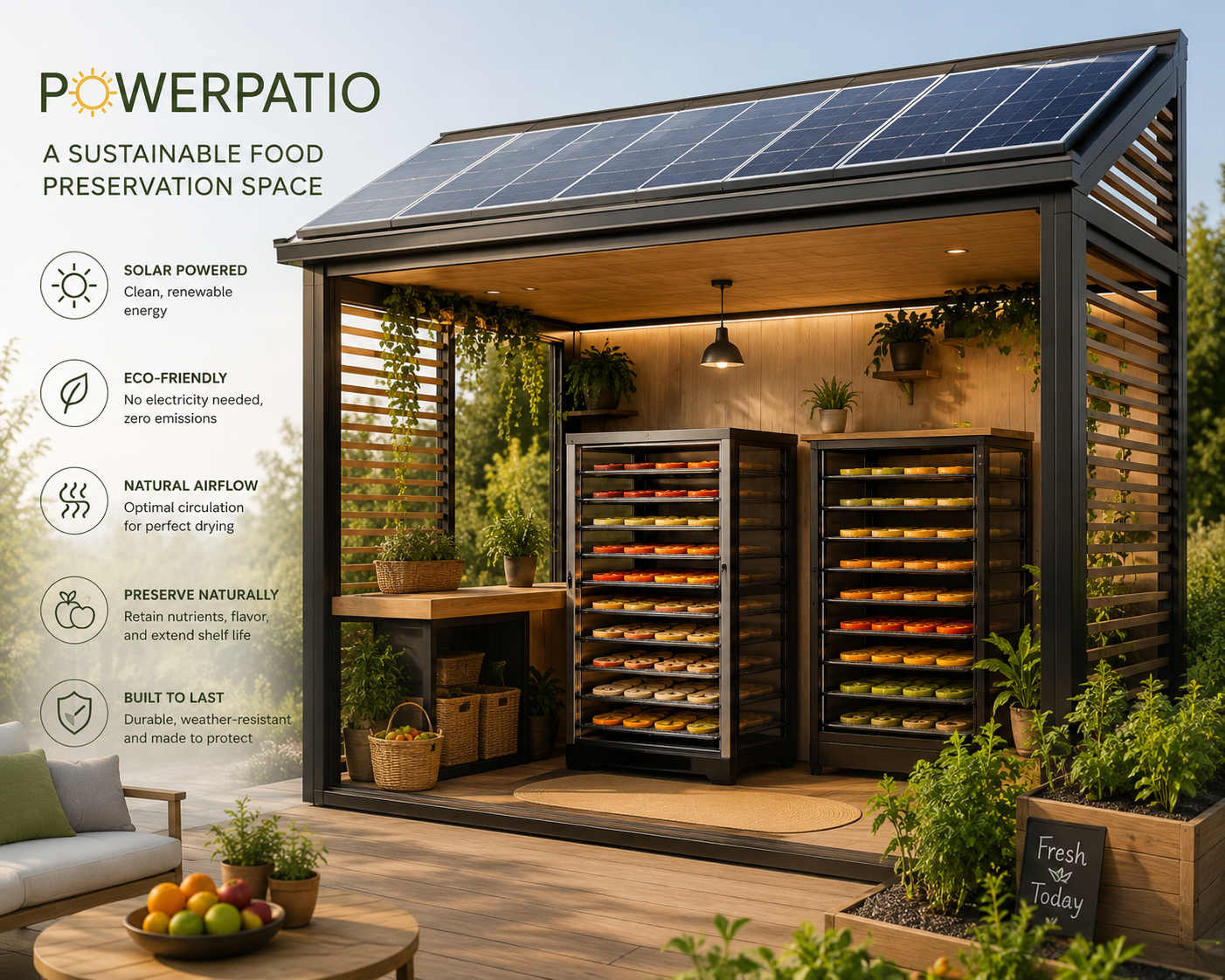
A PowerPatio can create a functional outdoor workspace for homeowners interested in food preservation, gardening, and sustainable living.
The covered structure provides protection from weather while generating renewable solar energy that can support outdoor appliances, lighting, and food-processing activities.
Benefits of a PowerPatio
- Generates clean energy
- Provides a shaded work area
- Supports sustainable lifestyles
- Enhances outdoor functionality
- Increases property value
- Modern architectural appeal
- Low-maintenance design
For homeowners focused on self-sufficiency and sustainability, a PowerPatio complements food preservation projects while adding practical value to the property.
How Much Does a Solar Dehydrator Cost?
The cost of a solar dehydrator depends on its size, design complexity, materials, and drying capacity. Whether you're building a DIY solar food dryer or purchasing a commercial system, understanding the cost range can help you choose the right option for your needs and budget.
DIY Solar Dehydrator Costs
DIY solar dehydrators are typically the most affordable option.
Estimated Cost Range
Box Dryer: $30–$100
Cabinet-Style Dryer: $100–$300
Large Homestead Dryer: $300–$800
DIY systems are ideal for homeowners who:
- Enjoy hands-on projects
- Want lower upfront costs
- Need customized drying capacity
- Live in sunny climates
Passive Solar Dehydrator Costs
Pre-built passive solar dehydrators typically range between:
$100–$500
Factors affecting price include:
- Construction quality
- Drying capacity
- Materials used
- Weather resistance
These systems are popular among gardeners and hobbyists who want an efficient food preservation solution without building one themselves.
Active Solar Dehydrator Costs
Active solar dehydrators include solar-powered fans or advanced airflow systems.
Estimated Cost Range
$500–$5,000+
Benefits include:
- Faster drying times
- Improved consistency
- Better performance in humid climates
- Greater drying capacity
These systems are often used by serious homesteaders and small-scale food producers.
Commercial Solar Dryers
Commercial solar food dryers are designed for agricultural operations and food businesses.
Estimated Cost Range
$10,000–$100,000+
Commercial systems provide:
- High-volume production
- Advanced temperature control
- Consistent performance
- Large drying chambers
While costly, they can significantly reduce long-term energy expenses compared to conventional drying systems.
Maintenance Tips for Solar Food Dehydrators
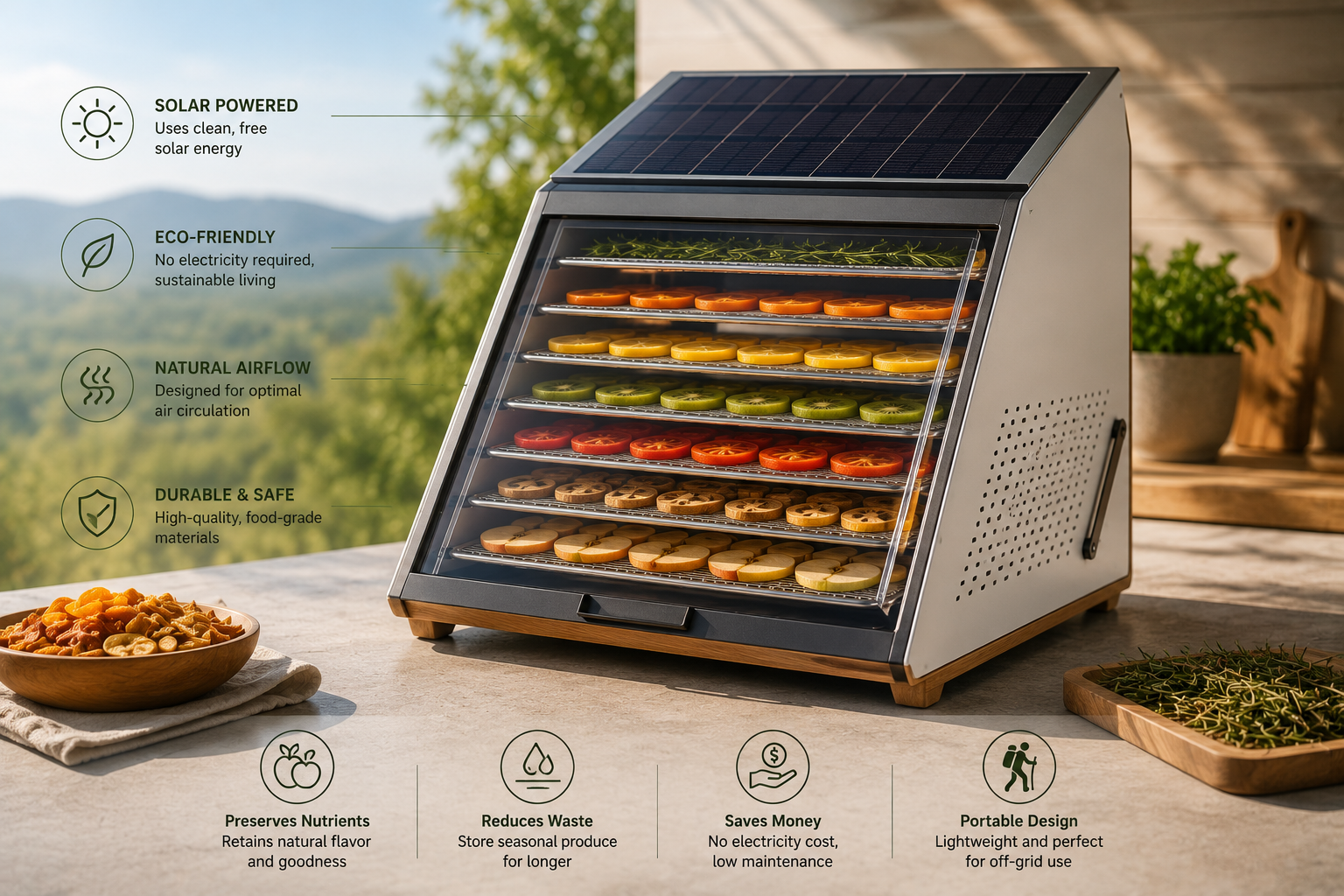
Proper maintenance helps maximize efficiency, extend equipment lifespan, and ensure food safety.
Fortunately, most solar dehydrators require relatively little upkeep compared to electric alternatives.
Clean Drying Trays Regularly
Food residue can accumulate over time and create sanitation issues.
After each use:
- Remove trays
- Wash with warm water
- Allow complete drying
- Inspect for damage
Clean trays improve airflow and reduce contamination risks.
Inspect Ventilation Openings
Airflow is critical for successful dehydration.
Check vents periodically for:
- Dust buildup
- Debris
- Insect nests
- Obstructions
Blocked airflow can dramatically reduce drying performance.
Monitor Collector Surfaces
Solar collectors should remain clean and unobstructed.
Dust and dirt can reduce solar heat absorption.
Regular cleaning helps maintain maximum efficiency.
Check Weather Seals
Outdoor dehydrators are exposed to changing weather conditions.
Inspect:
- Hinges
- Seals
- Fasteners
- Covers
Repairing small issues early can prevent larger maintenance problems later.
Protect During Harsh Weather
Although many solar dehydrators are designed for outdoor use, prolonged exposure to severe weather may reduce longevity.
Consider:
- Protective covers
- Seasonal storage
- Elevated placement
- Weather-resistant coatings
Proper protection extends equipment life significantly.
Bottom Line
Solar dehydrators are one of the most practical and sustainable food preservation solutions available today. Whether you're preserving a backyard harvest, preparing emergency food supplies, reducing food waste, or embracing an off-grid lifestyle, a solar food dehydrator can help you achieve your goals while minimizing energy consumption.
From simple passive solar dryers to advanced active solar dehydrators, there are options available for every budget and experience level. Understanding how solar dehydrators work, selecting the right materials, maintaining proper drying temperatures, and avoiding common mistakes can significantly improve drying efficiency and food quality.
As interest in sustainable living, homesteading, and renewable energy continues to grow, solar dehydrators are becoming an increasingly valuable addition to modern households. When paired with thoughtful outdoor solutions such as Solar Gazebos and PowerPatios, homeowners can create highly functional spaces that support food preservation, energy independence, and environmentally responsible living.
Whether you choose to build your own DIY solar food dryer or invest in a professionally designed system, a solar dehydrator can provide years of reliable food preservation while helping you make the most of the sun's abundant energy.
Frequently Asked Questions
What Is a Solar Food Dehydrator?
A solar food dehydrator uses sunlight to remove moisture from food, helping preserve fruits, vegetables, herbs, spices, and meats naturally.
How Does a Solar Dehydrator Work?
It heats air using solar energy and circulates warm air around food trays to evaporate moisture and dry the food.
What Foods Can Be Dried in a Solar Dehydrator?
You can dry fruits, vegetables, herbs, spices, and even meats like jerky in a solar dehydrator.
How Long Does Solar Dehydration Take?
Most foods take between 4 and 18 hours to dry, depending on sunlight, humidity, airflow, and food thickness.
Are Solar Dehydrators Safe for Meat?
Yes, as long as proper drying temperatures are maintained, especially between 145°F and 160°F for jerky.
What Is the Difference Between Passive and Active Solar Dehydrators?
Passive dehydrators use natural sunlight and airflow, while active dehydrators use solar-powered fans to improve drying speed and efficiency.
Can You Build a DIY Solar Dehydrator?
Yes, DIY solar dehydrators can be built using materials like wood, mesh trays, aluminum sheets, and polycarbonate panels.
Are Solar Food Dryers Worth It?
Yes, they help reduce food waste, lower energy costs, preserve harvests, and support sustainable living.
Do Solar Dehydrators Work on Cloudy Days?
They can still work, but drying performance is slower due to reduced sunlight.
How Long Can Dehydrated Food Be Stored?
Properly dehydrated food can last from several months to a few years when stored in airtight containers in a cool, dry place.


