.svg)
PVC Roofing: Complete Guide to PVC Roofing Systems


PVC roofing is one of the most durable and energy-efficient roofing systems used for commercial buildings, flat roofs, patios, and modern outdoor structures. Made from polyvinyl chloride membranes or panels, PVC roofing is known for its waterproof performance, UV resistance, weather durability, and low-maintenance design. These roofing systems are especially popular for flat and low-slope roofs because they provide long-lasting protection against rain, heat, wind, and moisture damage.
Compared to traditional roofing materials, PVC roofing offers excellent resistance to chemicals, fire, mold growth, and standing water while also improving energy efficiency through reflective roofing technology. PVC roofing systems are widely used for commercial buildings, outdoor patios, pergolas, carports, and modern residential roofing projects.
In this 2026 guide, we'll explore the advantages and disadvantages of PVC roofing, compare it with other roofing materials, explain installation methods, discuss costs and lifespan expectations, and provide expert guidance to help you determine whether PVC roofing is the right choice for your project.
What Is PVC Roofing?
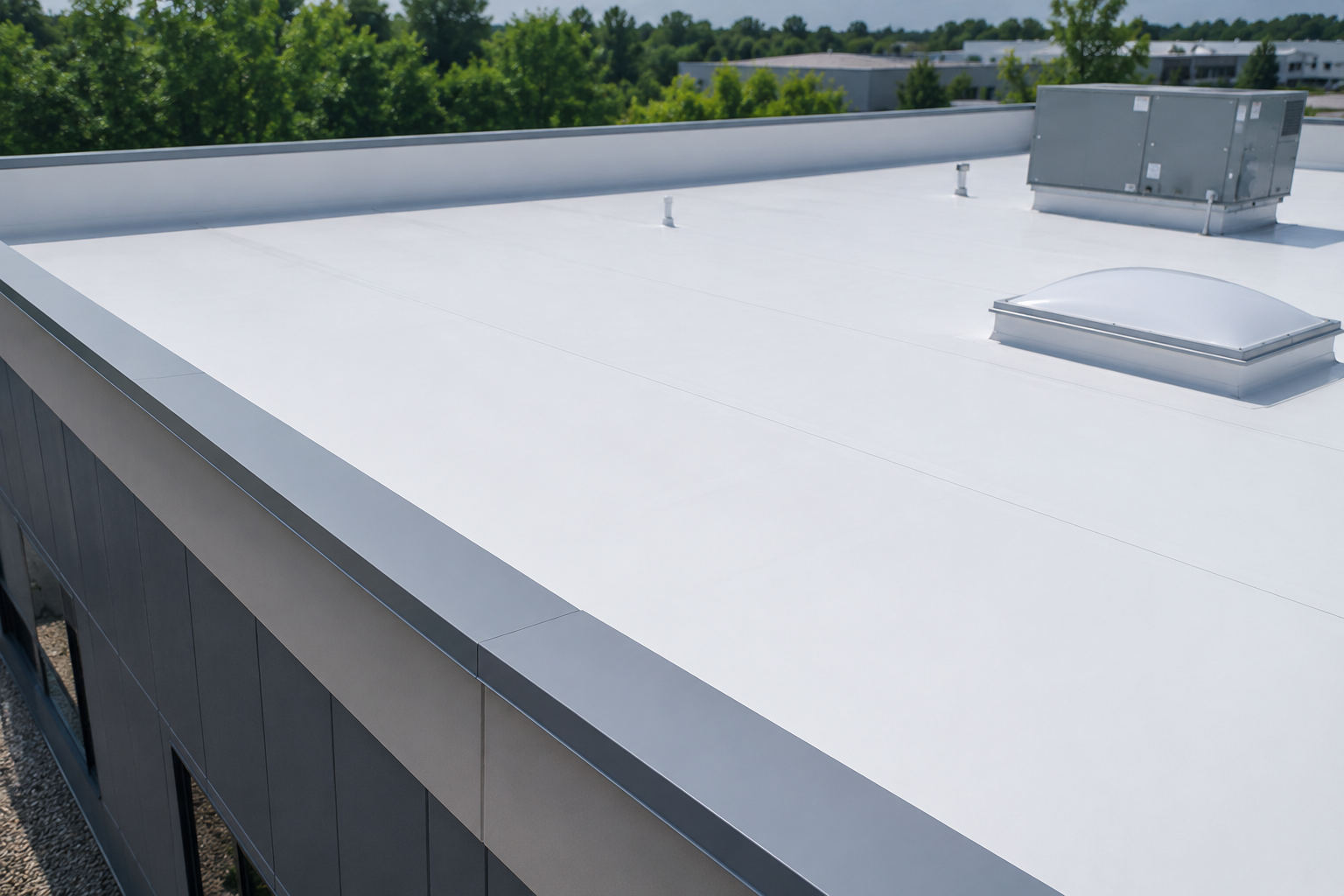
PVC roofing refers to roofing systems made from polyvinyl chloride membranes or panels that are designed to provide superior waterproofing and weather resistance. These roofing systems are commonly installed on commercial buildings, flat roofs, rooftop decks, patios, pergolas, and outdoor structures.
PVC roofing membranes consist of reinforced layers of synthetic plastic material that are heat-welded together to create highly durable, watertight seams. Because of their exceptional resistance to moisture, chemicals, UV exposure, and temperature fluctuations, PVC roofing systems have become one of the most popular options for modern roofing applications.
Common uses include:
- Commercial flat roofs
- Residential low-slope roofs
- Outdoor patios
- Pergolas
- Gazebos
- Carports
- Outdoor kitchens
- Rooftop decks
Interesting Pergola Roof Ideas for your space!
How PVC Roofing Works
PVC roofing systems create a waterproof barrier that protects structures from rain, snow, heat, UV radiation, and moisture intrusion. Unlike traditional roofing materials that rely on overlapping layers, PVC membranes are heat-welded together, creating seamless waterproof protection.
The roofing system typically consists of:
- Roof deck
- Insulation layer
- PVC membrane
- Fastening or adhesive system
- Protective flashing
- Drainage components
The reflective surface of PVC roofing also helps reduce heat absorption, making buildings more energy-efficient during warmer months.
Types of PVC Roofing Systems
Several types of PVC roofing systems are available depending on the project requirements.
PVC Roofing Membranes
PVC membrane roofing is the most common option for commercial and flat-roof applications. These membranes provide excellent waterproofing and long-term durability.
PVC Roofing Sheets
PVC roofing sheets are lightweight roofing panels commonly used for patios, carports, gazebos, and outdoor structures.
Reinforced PVC Roofing
Reinforced PVC roofing includes additional layers of polyester or fiberglass for increased strength and puncture resistance.
Reflective PVC Roofing
Reflective PVC roofing systems are designed to maximize energy efficiency by reducing rooftop heat absorption.
Interesting Carport Ideas for your Space!
PVC Roofing Sheets vs PVC Membranes
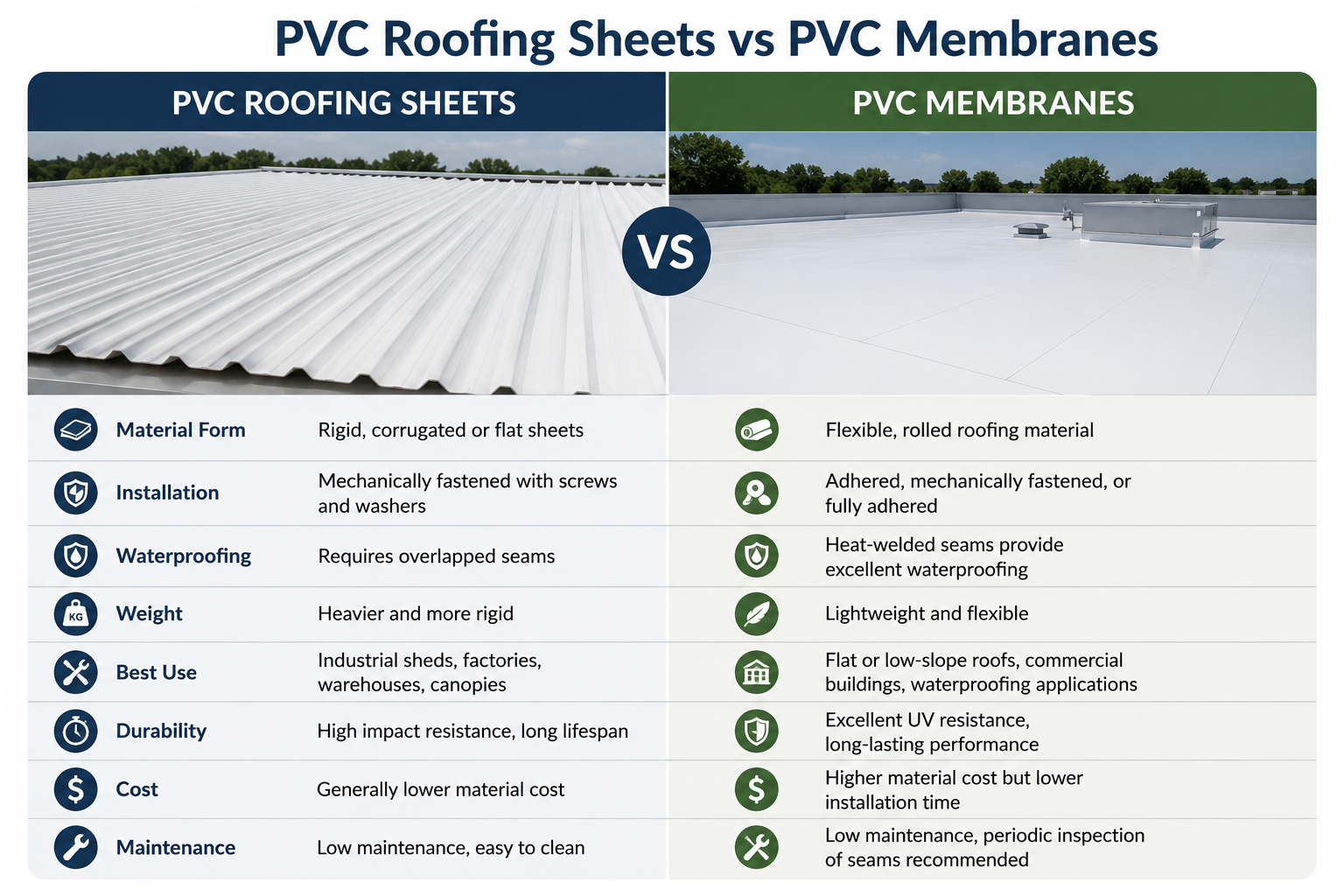
Although both materials use polyvinyl chloride, they serve different purposes.
- PVC roofing sheets are best suited for outdoor structures such as patios, pergolas, gazebos, and carports. They are usually installed with mechanical fastening and offer good waterproofing, low maintenance, and a moderate cost. Their typical lifespan is around 15 to 30 years.
- PVC roofing membranes are more commonly used for flat roofs and low-slope roofing systems. They are heat-welded for stronger seams, provide excellent waterproofing, require very little maintenance, and generally last longer, often between 20 and 40 years. They are usually more expensive than roofing sheets, but they offer better long-term performance.
PVC sheets work well for outdoor structures, while membranes are ideal for commercial and residential flat roofs.
Benefits of PVC Roofing
PVC roofing is considered one of the most durable and weather-resistant roofing materials available today.
Exceptional Waterproofing
Heat-welded seams create highly secure waterproof barriers that resist leaks and standing water.
Long Lifespan
Most premium PVC roofing systems last between 20 and 40 years with proper maintenance.
Energy Efficiency
Reflective PVC roofing surfaces help reduce cooling costs by minimizing heat absorption.
Weather Resistance
PVC roofing withstands:
- Heavy rain
- Snow
- UV exposure
- Wind
- Extreme temperatures
Low Maintenance
PVC roofing requires minimal repairs compared to many traditional roofing systems.
Fire and Chemical Resistance
PVC membranes provide excellent protection against fire, grease, chemicals, and environmental contaminants.
Disadvantages of PVC Roofing
Despite its advantages, PVC roofing also has some limitations.
Potential disadvantages include:
- Higher upfront installation costs
- Professional installation requirements
- Potential puncture damage
- Limited aesthetic options
- Difficult DIY installation
However, many property owners find that the long-term performance benefits outweigh the initial investment.
PVC Roofing vs TPO Roofing
PVC and TPO roofing are two of the most popular flat roofing materials.
- Lifespan: PVC roofing typically lasts 20–40 years, while TPO roofing usually lasts 15–30 years.
- Waterproofing: PVC offers excellent waterproofing, especially because its seams are heat-welded for stronger leak protection.
- Chemical resistance: PVC is highly resistant to chemicals, grease, and contaminants, making it a strong choice for commercial roofs.
- Heat resistance: PVC performs very well in hot climates and reflects heat effectively.
- Cost: TPO is usually more affordable upfront, while PVC has a higher initial cost.
- Maintenance: PVC generally requires less maintenance over time compared to TPO.
- Best use case: PVC is often preferred for commercial buildings and long-term performance, while TPO is chosen when budget is the main priority.
PVC roofing generally offers superior durability and waterproofing, while TPO roofing is often chosen for lower upfront costs.
PVC Roofing vs EPDM Roofing
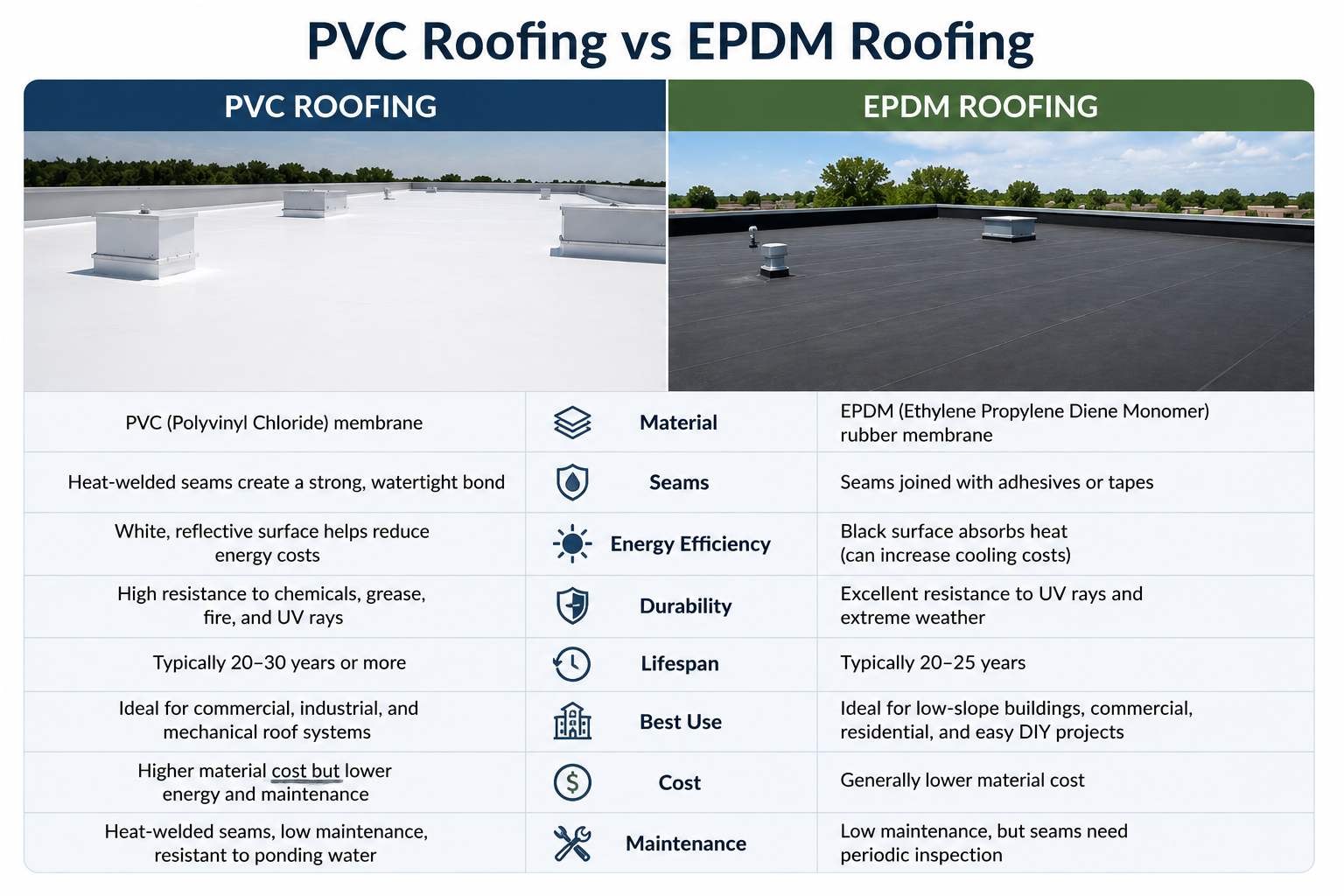
EPDM roofing remains another popular flat roofing material.
- Reflectivity: PVC has a highly reflective surface, while EPDM is darker and absorbs more heat.
- Waterproofing: PVC provides excellent waterproofing, while EPDM also performs well but is more dependent on seam quality.
- UV resistance: PVC offers excellent UV resistance, making it ideal for sunny and hot climates.
- Installation: PVC is typically heat welded, while EPDM is usually installed with adhesive or mechanical fastening.
- Lifespan: PVC generally lasts 20–40 years, while EPDM usually lasts 20–30 years.
- Best use case: PVC is often better for commercial roofs and energy efficiency, while EPDM is a common choice for cost-conscious flat roof projects.
PVC roofing performs particularly well in hot climates and commercial environments.
PVC Roofing for Patios, Pergolas & Outdoor Structures
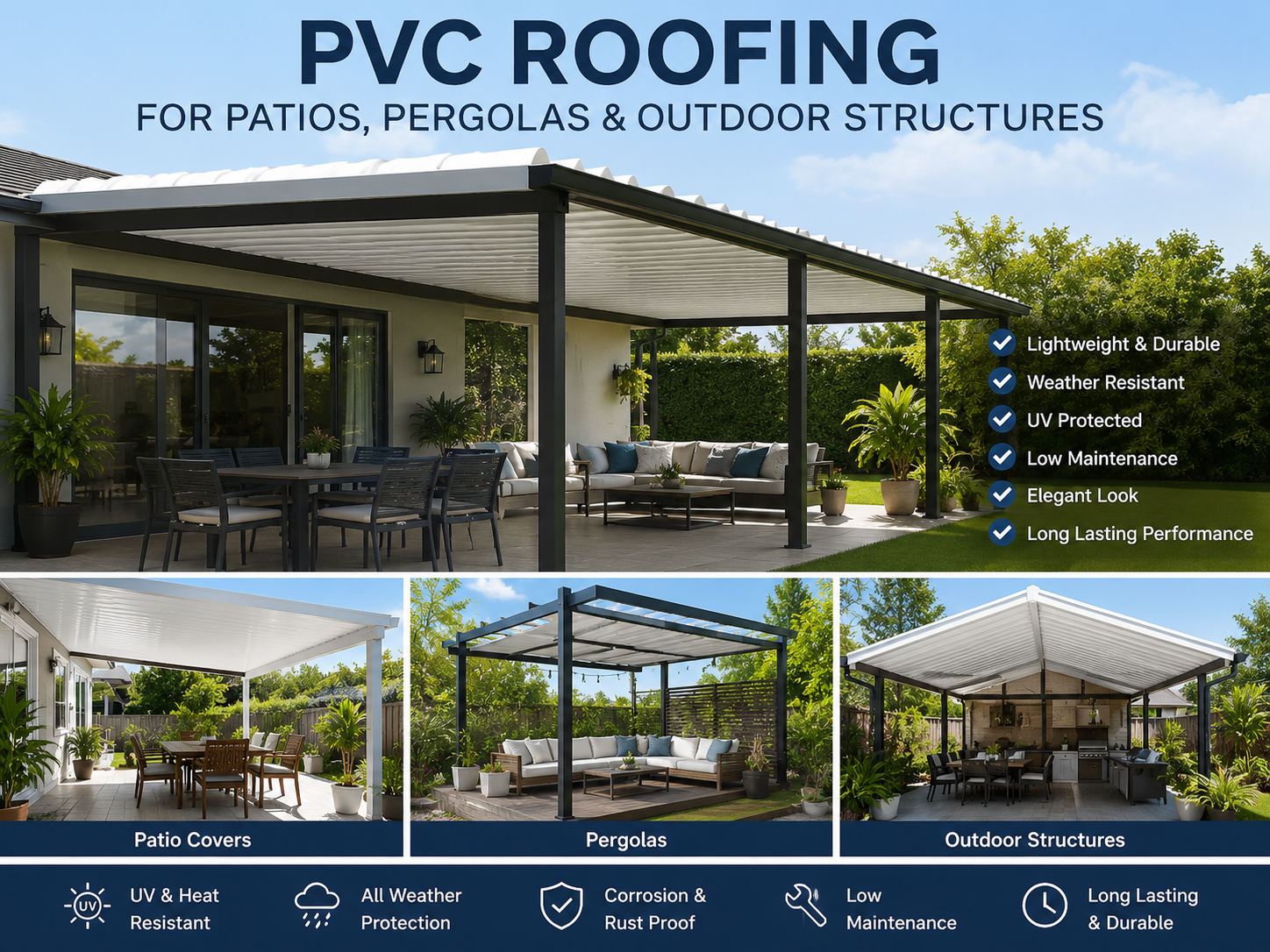
PVC roofing has become increasingly popular for outdoor living spaces because it provides weather protection while maintaining a modern appearance.
Popular applications include:
Covered Patios
PVC roofing creates durable, waterproof patio covers that require minimal maintenance.
Pergolas
Modern pergolas often incorporate PVC roofing panels for shade and weather protection.
Gazebos
PVC roofing provides long-lasting protection against rain and UV exposure.
Carports
Lightweight PVC roofing sheets work exceptionally well for residential and commercial carports.
Outdoor Kitchens
PVC roofing helps create protected outdoor cooking and entertainment spaces.
Also read some best front door awning ideas worth trying for your space!
Solar-Powered Outdoor Living With Arka Energy PowerPatio
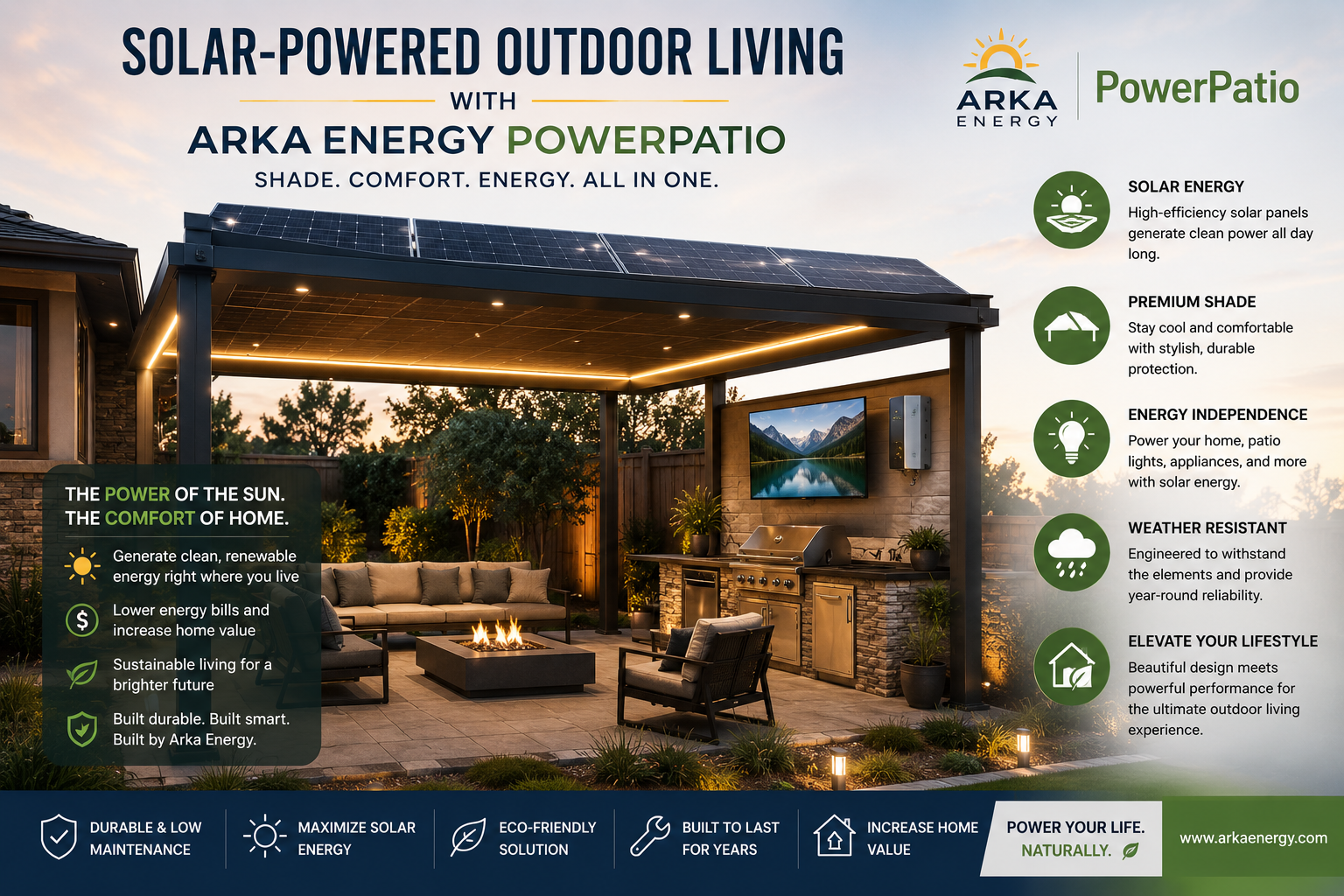
Homeowners looking to combine durable roofing with renewable energy can benefit from a solar-powered PowerPatio from Arka Energy.
Unlike traditional patio covers, a PowerPatio provides both weather protection and clean energy generation. These structures create comfortable outdoor spaces while powering lighting, appliances, entertainment systems, and other household energy needs.
Benefits of PowerPatio
- Generates renewable energy
- Provides weather protection
- Creates usable outdoor living space
- Improves property value
- Reduces energy costs
- Supports sustainable living
- Modern architectural design
- Low maintenance requirements
For homeowners investing in outdoor kitchens, patios, pergolas, and entertainment areas, combining durable roofing systems with solar energy technology offers long-term value and sustainability benefits.
Also read some amazing Gazebo roofing ideas for your space!
How Long Does PVC Roofing Last?
One of the biggest advantages of PVC roofing is its exceptional lifespan.
Typical life expectancies include:
- Standard PVC roofing: 20–30 years
- Premium PVC roofing: 30–40 years
- Commercial PVC systems: 25–40 years
Factors affecting lifespan include:
- Installation quality
- Climate conditions
- Maintenance frequency
- Roof traffic
- Material thickness
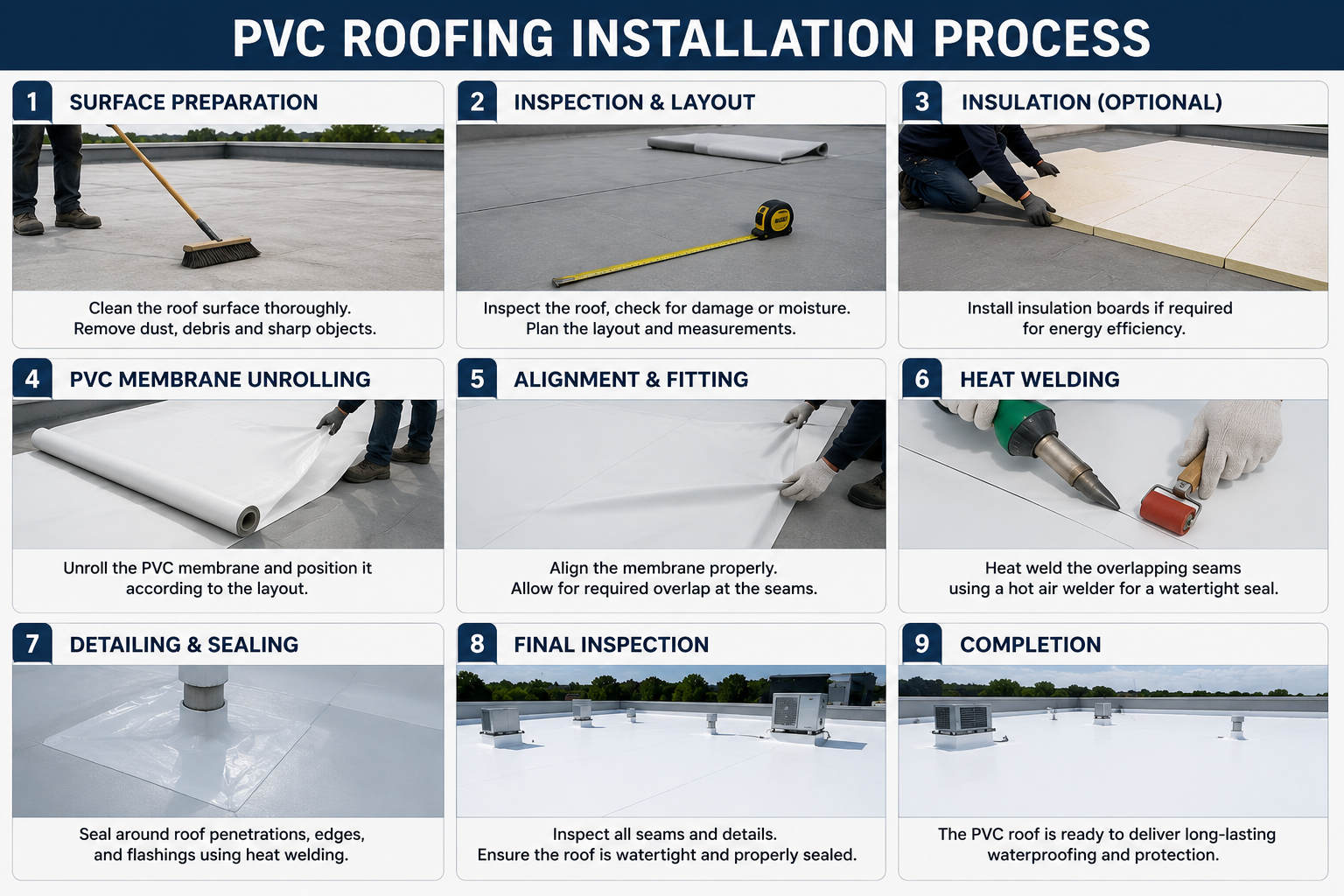
PVC Roofing Installation Process
Professional PVC roofing installation generally involves:
- Roof inspection
- Surface preparation
- Installation of insulation
- Placement of PVC membrane
- Mechanical fastening or adhesion
- Heat welding of seams
- Flashing installation
- Drainage testing
- Final inspection
Professional installation is recommended to maximize performance and warranty protection.
PVC Roofing Maintenance Tips
PVC roofing requires relatively little maintenance, but regular inspections help maximize lifespan.
Recommended maintenance includes:
- Cleaning debris regularly
- Inspecting seams annually
- Checking roof drains
- Monitoring flashing
- Removing standing water
- Repairing punctures promptly
Routine maintenance can significantly extend roof performance.
How Much Does PVC Roofing Cost?
- PVC roofing costs vary based on material quality, labor rates, roof size, and installation complexity.
- PVC membrane material typically costs $4–$12 per sq. ft.
- Installed PVC roofing usually costs $7–$20 per sq. ft.
- Residential PVC roofing projects often range from $5,000–$25,000+
- Commercial PVC roofing projects can range from $10,000–$100,000+
- Although PVC roofing has a higher upfront cost, its long lifespan and low maintenance needs often make it a strong long-term investment.
Conclusion
PVC roofing has become one of the most durable, energy-efficient, and versatile roofing systems available for residential, commercial, and outdoor applications. Its superior waterproofing, weather resistance, long lifespan, and low-maintenance requirements make it an excellent choice for flat roofs, patios, pergolas, carports, and modern outdoor roofing solutions.
Whether you're comparing PVC roofing to TPO or EPDM, evaluating roofing costs, or designing a sustainable outdoor structure, PVC roofing offers a strong balance of performance, durability, and energy efficiency. For homeowners looking to enhance outdoor living areas, combining durable roofing materials with solar-powered structures such as Arka Energy's PowerPatio creates a practical and sustainable long-term investment.
Frequently Asked Questions
How long does PVC roofing last?
Most PVC roofing systems last between 20 and 40 years.
Is PVC roofing better than TPO?
PVC roofing generally offers better waterproofing and durability, while TPO typically has lower upfront costs.
Is PVC roofing waterproof?
Yes. PVC roofing is one of the most waterproof roofing systems available.
How much does PVC roofing cost?
Installed PVC roofing typically costs between $7 and $20 per square foot.
Can PVC roofing be used for patios and pergolas?
Yes. PVC roofing sheets and panels are widely used for patios, pergolas, gazebos, and outdoor living spaces.


